The Origin of Stager Backstage
January 26, 2022 - Mike van Gaasbeek - Reading time: 3 minutes
Stager's story starts with a personal one. While writing my thesis on French philosopher Jean Baudrillard, I develop chronic RSI, better known as "mouse arm" - a fitting injury for someone of my generation. More than 15 minutes a day at the computer becomes impossible, and other physical effort brings on back and right arm pain almost instantly. That builds a real aversion to doing anything twice. Typing the same thing again just means more pain for nothing.
After two discouraging years, I discover Dragon Naturally Speaking, speech recognition software still in its infancy at the time. Labeled unemployable on paper, I land a subsidized job at WORM.
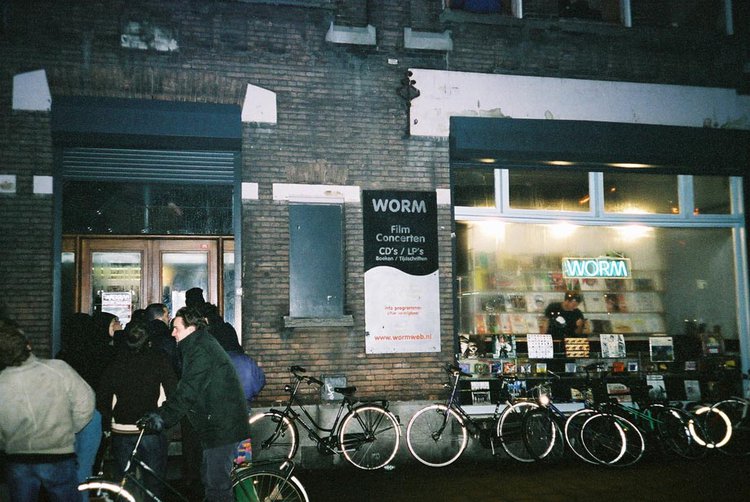
At WORM's farewell party on Rochussenstraat, there's a line out the door for the first time.
The idea of a virtual backstage
WORM operates out of a squatted former carpet shop on Rochussenstraat, and by the gas heater in the office next door, I dictate my emails and documents into the microphone. WORM already has a habit of streamlining processes - there are little systems and spreadsheets everywhere to simplify event production - but I'm still shocked at how often the same event name gets typed in from scratch: in the website CMS, the newsletter, the templates for the local listings guide, the box office count sheet, the guest list, the backstage catering form, and on and on.
My speech software can't really copy and paste text between programs or browser windows, so I keep getting forced back to keyboard and mouse anyway, leaving me with stiff shoulders, buzzing forearms, and a nagging pain across my upper back. That's where the idea comes from: a web-based tool where information only has to be entered once. It becomes my way out!
Together with web developer Ronald, we start by building an extensive CMS linked to the WORM website, which also automates a few steps in the production process. Around the same time, online ticketing is taking off, and that's where the idea comes from: a platform that lets organizers streamline their production process, a kind of virtual backstage. We could fund that platform with the revenue from online ticketing. Stager's business model is born.
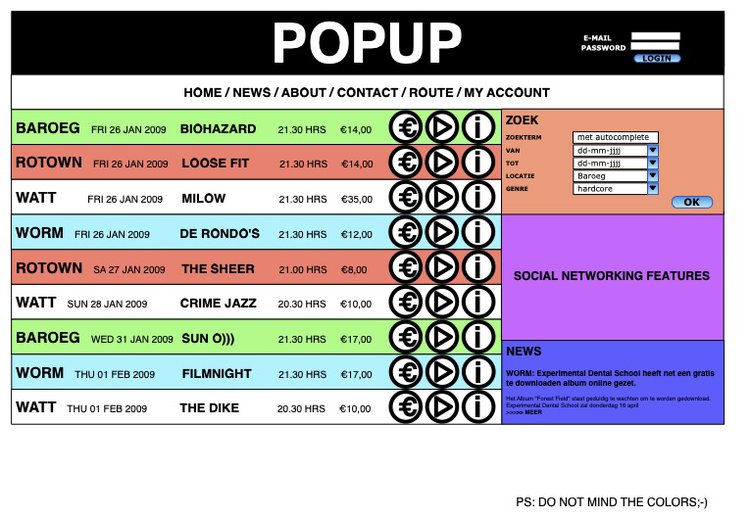
Wireframe of Popup Rotterdam's collective website, linked to the Stager Ticket shop.
Working with Popup Rotterdam
Rotterdam's venues, organized under the collective "Popup Rotterdam," respond enthusiastically to our plan. Why hand over tens of thousands of euros a year to ticketing providers that mostly just process a payment and spit out a barcode? Instead, that money goes into streamlining how we operate. Good timing too, since Rotterdam's pop music scene is going through a rocky patch.
We dive in with plenty of energy. Spreadsheets, templates, formats, and screenshots of homemade systems land in my inbox from every direction, and the real puzzle begins: what information actually gets entered to organize an event, and where does it get reused. With help from intern Joris, an HTML mockup slowly takes shape, a system we eventually name Stager.
stager (ˈsteɪdʒə)Someone who supervises the physical aspects in the production of a show and who is in charge of the stage when the show is being performed
The first Stager logo, featuring a meerkat. As designer Arjen de Jong put it: "Stager is that one meerkat standing up straight, keeping watch over everything."
The collapse of Rotterdam's pop scene
While we're already working with development partner and investor Lunatech, the Rotterdam venues fall into disagreement over the ticket fee and the running of Stager. Years of tight budgets have pushed some venues right up to the edge, and their interests start pulling in different directions. Not long after, the biggest venue, WATT (formerly Nighttown), is declared bankrupt. Because WATT had recently merged with the venue and rehearsal space complex WaterFront, that location on the Boompjes sits empty indefinitely too.
The two main pillars of the plan collapse, but the trouble isn't over yet. Right after WORM opens its new building on Witte de Withstraat, we get hit by the Rutte I government's cultural sector budget cuts. WORM's subsidy is more than halved, forcing us to shrink the organization hard. Not long after that, culture alderman Van der Laan pulls the plug on the multi-million-euro Urban Culture venue in the Maassilo, renamed De Nieuwe Oogst by then.
So there we are, in our massive building on Witte de Withstraat, with a stripped-down team and a finished software platform with zero customers...
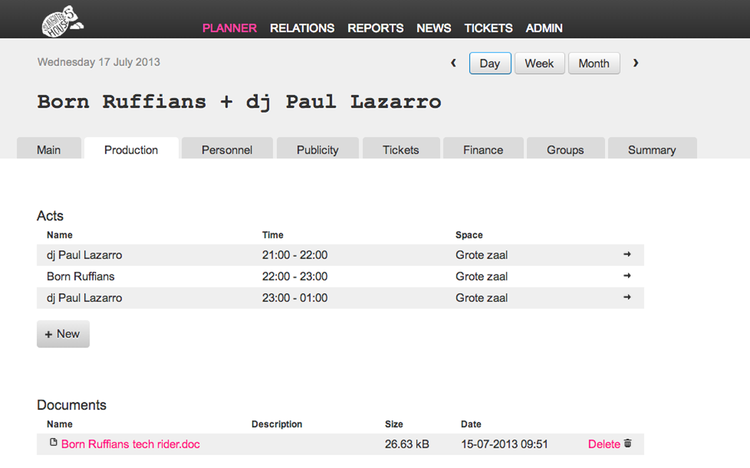
The first version of Stager, Courier font and magenta colors included. Wonderfully dated ;)
Stager in "Stealth" Mode
For the years that follow, Stager runs in "stealth mode." WORM's bookkeeper handles Stager's admin too, the system administrator keeps the servers running, the development partner builds a new feature every now and then, and the downsized WORM team can't function without Stager from day one. It becomes the engine behind the organization, the thing that lets our small team keep the doors open while we wait for better times.
Alongside my day job as managing director of WORM, I manage to sign up the occasional interested venue or theater, and the support line is forwarded to my personal cell phone around the clock. That changes when a handful of mid-sized venues, clubs, and festivals decide to start working with Stager, and we can finally hire our first employee, Jeff.
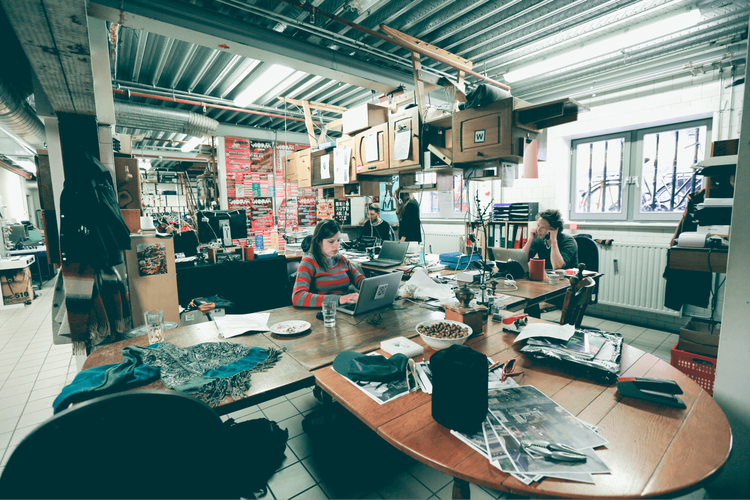
The Stager team in WORM's wonderfully cozy, thoroughly messy office.
Stager comes of age
With Jeff, we finally have someone who spends the whole week spreading the Stager gospel: "Stager is an online backstage for you as an organizer, built to make teamwork easier. That's why we work steadily on building out the most complete system for event planning, marketing, and ticketing, because organizing an event is really just one process, from booking to execution."
At that point we still can't compete feature for feature with standalone planning, marketing, and ticketing systems, but more and more organizers choose Stager anyway, for the overview it gives and the ability to work together as a team on producing events. Meetings where everyone shares info from their own little system, and emails or chats chasing info from some other corner of the organization, visibly start to disappear. "Just check Stager" gets said more and more.
We're now almost ten years in. Stager started out mostly from the idea that information shouldn't have to be entered twice, but its development has increasingly shifted toward integrating the different parts and phases of the production process. Showing you how your marketing actually affects ticket sales. Giving volunteers and travel parties access to your events. Building customer profiles from sales data. And so on. We're nowhere near finished with any of that. Plenty of ideas left, not least from loyal users who give us input every day to make Stager the best tool out there for event organizers.