5 Crowd Management Tools for Large-Scale Events
31 August 2026 - Senna Huurman - Reading time: 4 mins
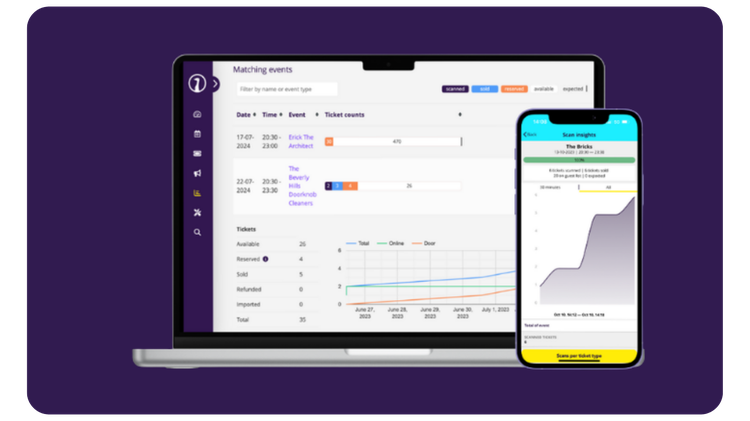
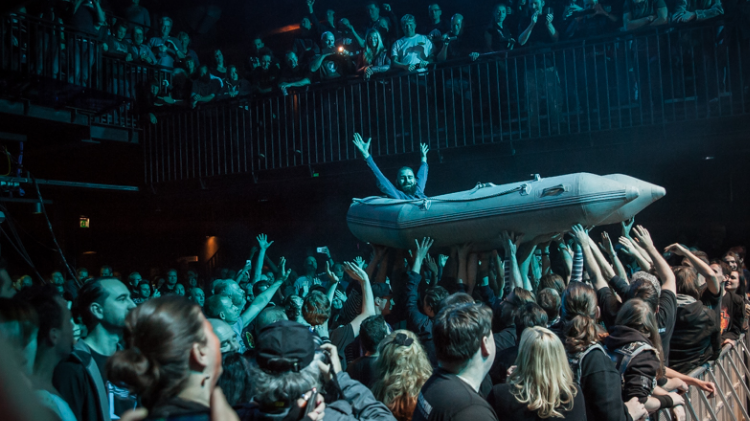
Crowd management carries a lot of responsibility for a venue. Despite what is often thought, crowd density is the most important thing to manage, not headcount. If you have a half-sold concert, but everyone is stuck in a tight hallway at the entrance, then your risks go up. A lot of work goes into managing density, and when it's done well, no one will notice your good work. But, when done poorly, it quickly damages event quality, your audience's experience, and your reputation as a venue on the long-term.
Getting the math right on paper is one thing. Managing it in real time, at the entrance, at the barriers, and at the door, is another. I’ve gathered five areas that can make the biggest difference for your business!
1: Spread arrivals instead of piling them
A queue doesn't form because too many people showed up. It forms because too many people showed up at once. Research on event crowd management is says that electronic ticketing with booked entry slots spreads arrivals across the day and prevents the overcrowding that builds up at a single peak window, doing more for gate safety than extra staff could manage.
The solution isn't complicated at all! If you give different ticket types different entry windows, and yourself the ability to limit how many people are cleared to arrive in any given slot, you’ll be able to spread the demand. From there on, the physical blockage at the gate mostly takes care of itself.

2: Get people through the door fast
The door is a physical barrier and the goal of crowd management is to keep it from becoming dangerous. Stager views the entrance as a sequence: approach, screening, scan, and release into the venue. If one stage of this sequence slows down, jams ripple through the whole thing.
This is where self-service and offline-capable scanning would be able to remove one of the most common failure points (a scanner that loses connection at the exact moment it's needed most) and lets you add lanes without adding extra staff.
Every second saved at the scan point is useful. By gaining time with each smooth entry, you can process more people per hour before the queue outside even starts building.

3: Follow the crowd live
Fixed capacity planning tells you what should happen. Live data tells you what is actually happening.
It’s estimated that nowadays the large majority of event organizers (around 77%) rely on real-time crowd data to manage capacity not only before the event but also during the event itself. Reviews of crowd safety failures from the past cover a similar topic, namely that the data existed somewhere, but it wasn't visible to the people who needed it in the moment.
Real-time entry and scan data can fix this problem. By knowing how many people are inside, how many tickets are still unscanned, and how fast the entry rate is changing you’re able to turn crowd management from a guess into a decision you can confidently back up!

4: Get VIPs and listed guests through without a congestion of their own
Guest lists with VIPs, press, artists, and staff, create a second, smaller version of the previously mentioned entry problem, usually with less tolerance for errors or delay. Stager suggests you should offer access lanes and real-time list checks, ideally digital rather than a printed sheet, to prevent both the validation errors and the awkward standoffs that happen when a name doesn't match or shows up twice.
A guest list that updates live, and that crew at the door can check without flipping through paper, is what keeps this group moving without creating an unnecessary congestion.

5: Be quick to act the moment someone can't get in
Not everyone who arrives gets in. In some cases, a ticket gets refunded, or security makes a call. What happens next at the door does more for your reputation than most organizers expect. As customer experiences are something that can shape the way people view an organization, a fast, respectful resolution is critical as it comes across very differently than a drawn-out one, even when the outcome might be the same.
In this scenario, the practicalities matter less than the speed. A refund that takes one tap instead of a ten-minute negotiation can keep this from turning into a scene at your entrance.

What this looks like inside Stager
These five topics are exactly what Stager's ticketing and door tools are built around (Sorry, I couldn’t stop the self promotion!):
Event series and ticket types let you spread arrivals across time slots and access levels
The Stager scan app handles fast, offline-capable scanning across multiple devices at once
Real-time insights give you live sold and scanned numbers as the night unfolds
The guest list system keeps VIP, press, and staff lists live and checkable from the app
On-the-spot refunds wrap up a decision at the door in one tap, no bank details or waiting required
Is your curiosity not sated yet? Don't be scared to explore Stager's ticketing features and discover how Stager can help you with improving your crowd management!
Frequently Asked Questions
The UK's Purple Guide recommends no more than about 2 people per square meter for outdoor events, while the Green Guide allows denser standing areas at stadia, around 4.7 per square meter. Density, not total headcount, is what actually drives crowd-related injury risk.
Spread arrivals instead of concentrating them: give different ticket types different entry windows, and cap how many people can arrive in a given slot. Electronic ticketing with booked entry slots is consistently shown in event management research to prevent the overcrowding that builds at a single peak window.
Static capacity planning tells you what should happen; live entry and scan data tells you what is happening. Roughly 77% of event organizers now rely on real-time crowd data to manage capacity during the event itself, turning crowd decisions from a guess into something you can back up.
VIP, press, and staff lists create a smaller version of the same entry bottleneck, usually with less tolerance for delay. A guest list that updates live and that door staff can check digitally, rather than from a printed sheet, prevents credentialing errors and awkward standoffs at the door.
Yes. Around 70% of buying experiences are shaped by how someone feels they were treated, not just the outcome. A refund that takes one tap instead of a drawn-out negotiation keeps a single denied entry from turning into a scene that damages your event's reputation.
Author
Written by Senna Huurman
Marketing and Sales Intern